

Visibility in AI search starts with a useful question and an answer worth referencing. Build pages that help a reader make a decision, then make those pages easy to discover, read, and verify.
How AI answers pick their sources
Most AI search experiences work in two steps. First the system searches: it rewrites the user’s prompt into one or more web queries (often called query fan-out) and retrieves candidate pages from a search index. Then a language model reads those candidates and writes an answer, linking to some of them as sources.
That has two practical consequences. Your page has to be retrievable: crawled, indexed, and relevant to the queries the system generates. Once retrieved, it has to be usable, with a passage that answers the question clearly enough for the model to rely on it. Classic SEO mostly covers the first part. AEO adds attention to the second.
Each platform uses its own index and crawlers. Google’s AI Overviews and AI Mode draw on Google Search. ChatGPT search relies on OAI-SearchBot and its search partners. Perplexity runs PerplexityBot. Claude’s web search uses Claude-SearchBot. You cannot submit a page to any of them directly; you can only make it eligible and worth choosing.
Start with the questions people ask
People type keywords into a search box, but they ask AI assistants full questions, often with context such as budget, location, experience level, or constraints. Plan your content around those questions.
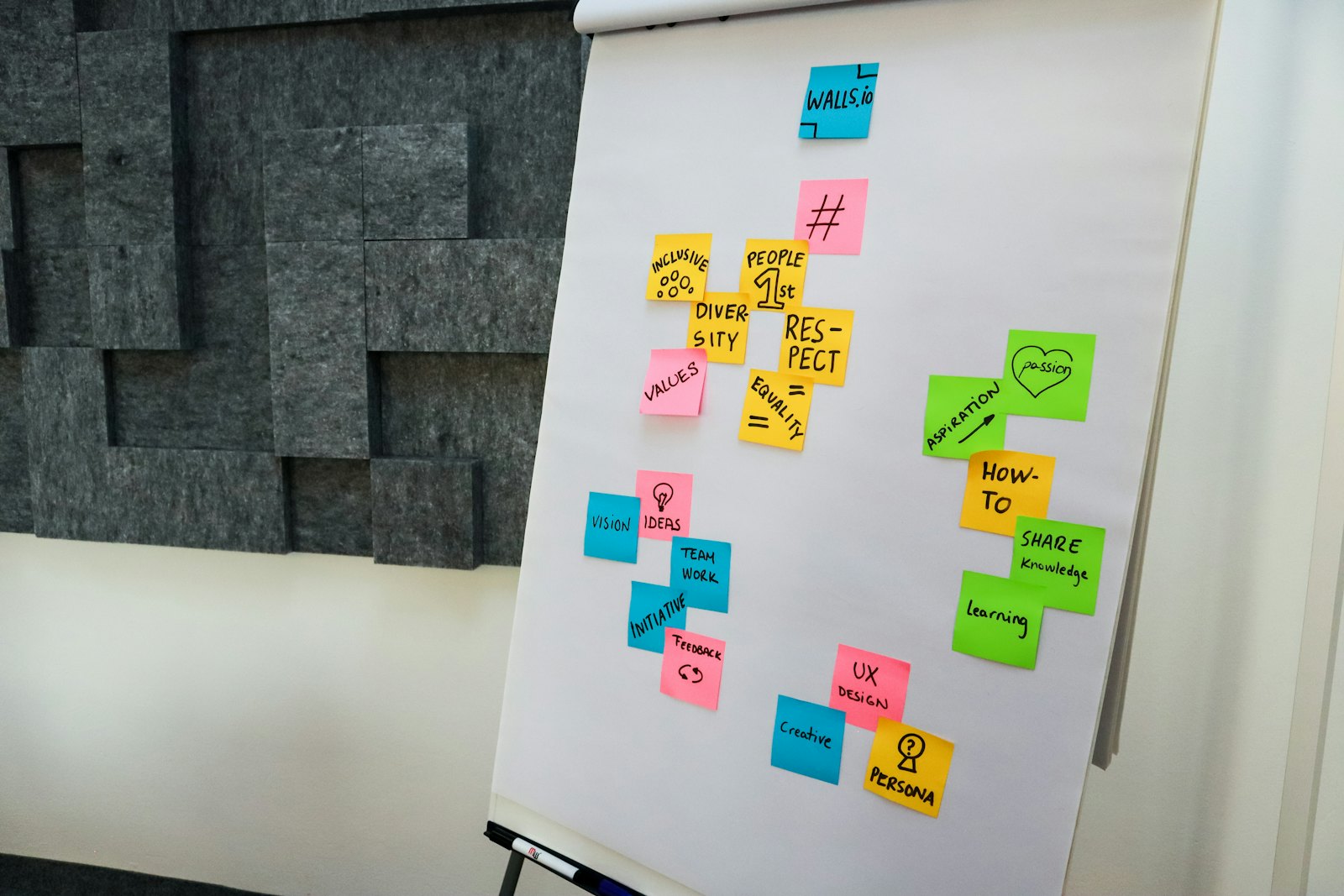
Collect questions from places where customers speak in their own words:
- Sales and support: call notes, chat transcripts, support tickets, and “one more question” emails.
- Search data: question-style queries in Google Search Console and Bing Webmaster Tools, plus the “People also ask” boxes for your core topics.
- Communities: Reddit threads, forums, and review sites where people compare options.
- The AI tools themselves: ask an assistant about your category and note which follow-up questions it suggests.
Then group the questions by intent. A useful split is discovery (“what is the best way to…”), comparison (“X vs Y for small teams”), and problem-solving (“why does X happen and how do I fix it”). One focused page can answer one primary question and the follow-ups that naturally belong with it. If two questions need different answers for different readers, they probably deserve two pages.
Make the answer easy to find
Put a clear answer near the beginning of the page or section. Follow it with the evidence, conditions, and examples that make it useful. A good pattern is answer → reason → proof → exceptions.
- Use descriptive headings that read like the question a person would ask.
- Define terms explicitly the first time you use them.
- Use compact tables for comparisons, specifications, and prices.
- Keep each section self-contained, so a passage still makes sense when it is quoted on its own.
Replace vague positioning with specifics. “Our platform transforms your workflow” gives a model nothing to cite. “Booking software for physiotherapy clinics with 1–10 practitioners; integrates with Google Calendar; no insurance billing” tells a reader (and an answer engine) who it serves, what it does, and where its limits are.
None of this guarantees a citation. It makes your page easier to use when it is retrieved, which is the part you control. For a deeper walkthrough, read how to write answer-first pages that AI can quote.
Add something a summary cannot invent
If your page says the same thing as ten others, a model can answer without you. Give the page a reason to exist:
- Original data: survey results, benchmarks, pricing you collected, measurements from your own product.
- First-hand experience: what happened when you actually tested, installed, or used something, including what went wrong.
- A documented process: the steps, the tools, the time it took, and the decision points.
- A well-explained comparison: criteria stated up front, applied consistently, with a clear recommendation for each type of reader.

Show how you reached a conclusion and link factual claims to primary sources. Specific numbers with a date and a source are far more quotable than adjectives.
Make the source easy to trust
Answer engines and the people reading their answers both look for signs that a source is accountable. Name the author or the responsible organization. Add a short author bio with relevant experience. Show a publish date and update it when the content really changes. Keep an About page that explains who runs the site and how to contact you.
Your brand also needs to exist outside your own site. Mentions in industry publications, reviews, partner pages, and community discussions help search systems connect your brand to a topic. Using the same company name, product names, and descriptions everywhere makes those connections easier.
Keep the foundations in place
Google states that there are no additional requirements and no special optimizations needed to appear in AI Overviews or AI Mode: a page must be indexed and eligible to show with a snippet, and normal SEO best practices apply. Crawlable pages, internal links, fast and stable rendering, important content in text, and structured data that matches visible content still do most of the work.
Before you optimize copy, check that crawlers can reach the page at all. Our technical AEO checklist walks through bot access, rendering, and indexing.
A 30-day starting plan
| Week | Focus | Output |
|---|---|---|
| 1 | Collect and group 20–40 real customer questions | A question map by intent, with one target page per cluster |
| 2 | Technical check of the 5–10 most important pages | Crawl, index, and bot-access issues logged and fixed |
| 3 | Rewrite two priority pages answer-first and add evidence | Direct answers, tables, sources, author and date |
| 4 | Record a baseline in AI search tools | A tracking sheet you can repeat monthly |
Choose one commercially relevant question. Review the page that should answer it. Improve the direct answer, add supporting evidence, and check that crawlers can access it. Then record whether that page appears in a repeatable set of AI search tests (see how to measure AI search visibility).
Read the primary sources
- Google: AI features and your website
- Google: optimizing your website for generative AI features (May 2026)
- OpenAI: guidance for publishers
- OpenAI: overview of crawlers
- Anthropic: how Claude’s bots crawl the web

Liam Roy has spent seven years on SEO projects for ecommerce, SaaS, and crypto sites. Once Google started showing AI Overviews and people began asking ChatGPT for recommendations, he fell for this kind of optimization. He has followed AI search updates and the development of the language models behind them from day one, and he writes everything on AEO Signals.
liam@aeosignals.co